
 Title: “Wireless Forever: Engineering the Radios that Never Plug-in”
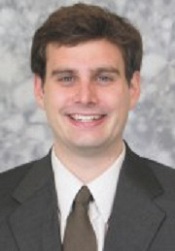
Professor Greg Durgin
The Propagation Group
Electrical and Computer Engineering Department,
Georgia Institute of Technology,
Atlanta, Georgia, USA
Abstract
This talk surveys the state-of-the art in RFID, energy-harvesting sensors, and devices for the Internet of Things. Everything you know about wireless communications will be challenged, as we discuss ultra-low energy RF devices, bizarre forms of modulation, “smart’’ antennas that do not require power, and undulating waveforms that extend the physical limits RF energy-harvesting. We present the engineering breakthroughs of today that will lead to real Sci-Fi applications of tomorrow: peel-and-stick radio sensors that last forever, mm-scale wireless location capability, and devices that can exchange information over kilometer-scale distances without actively transmitting radio waves.
Biography
Gregory D. Durgin joined the faculty of Georgia Tech’s School of Electrical and Computer Engineering in Fall 2003 where he serves as an associate professor. He received the BSEE (96), MSEE (98), and PhD (00) degrees from Virginia Polytechnic Institute and State University. In 2001 he was awarded the Japanese Society for the Promotion of Science (JSPS) Post-doctoral Fellowship and spent one year as a visiting researcher with Morinaga Laboratory at Osaka University. In 1998 he received the Stephen O. Rice prize (with coauthors Theodore S. Rappaport and Hao Xu) for best original journal article in the IEEE Transactions on Communications. Prof. Durgin also authored Space-Time Wireless Channels, the first textbook in the field of space-time channel modeling. Prof. Durgin founded the Propagation Group at Georgia Tech, a research group that studies radiolocation, channel sounding, backscatter radio, RFID, and applied electromagnetics. He is a winner of the NSF CAREER award as well as numerous teaching awards, including the Class of 1940 Howard Ector Outstanding Classroom Teacher Award at Georgia Tech (2007). He is a frequent consultant to industry, having advised many multinational corporations on wireless technology.